


Introduction
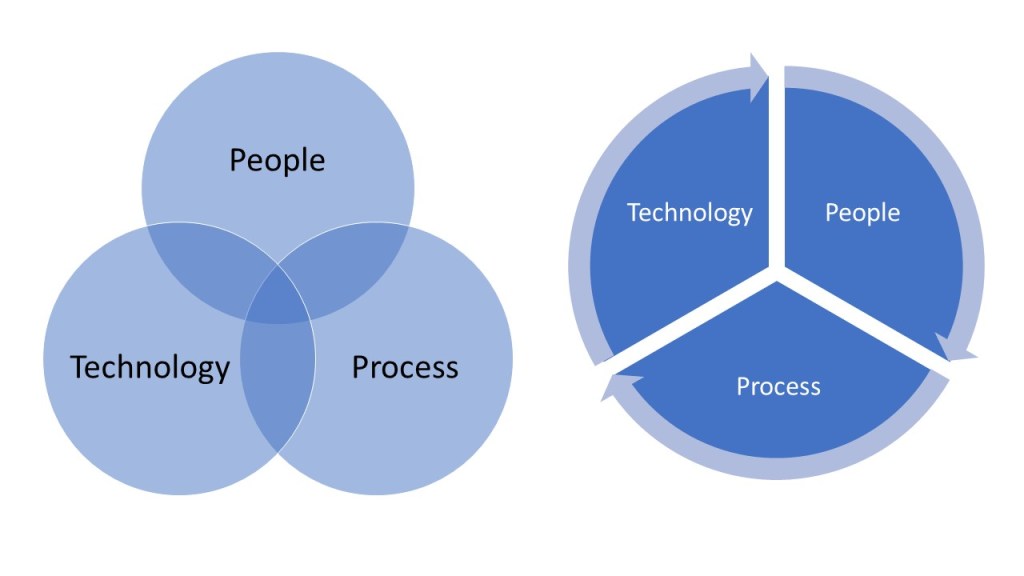
When looking at any Transformation initiative, most experts would concur on saying that it should encompass 3 domains i.e. People, Process and Technology (PPT). Typically such a PPT framework states that a good balance between the 3 components needs to be maintained for any organizational transformation, digital or not, as People perform tasks using Processes facilitated and streamlined by Technology. Therefore, for the success of the Transformation and for defining the future state, all 3 components People, Process and Technology must be considered and reviewed.
A little bit of history
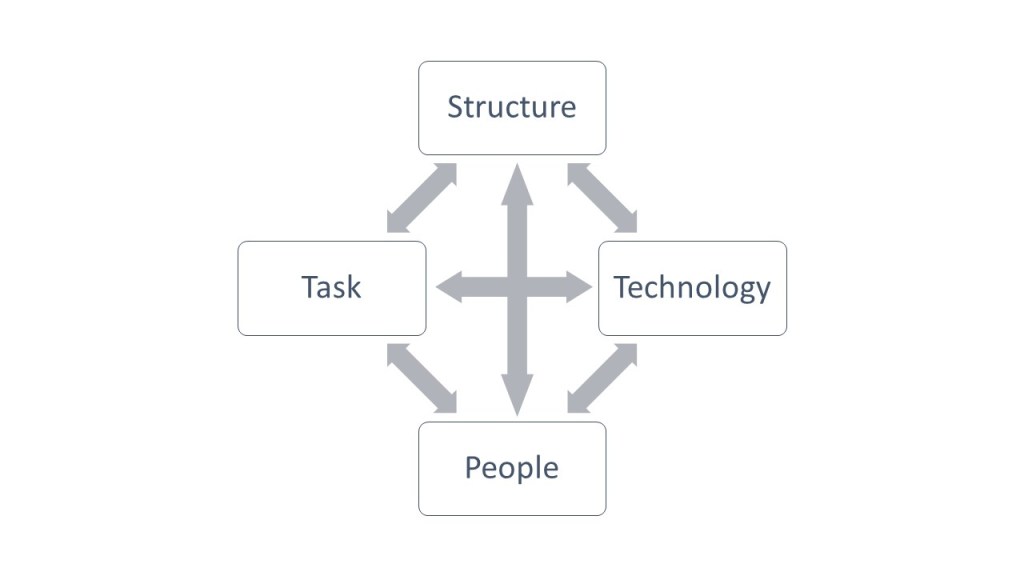
Back in 1965, Harold J. Leavitt from Carnegie Institute of Technology wrote a paper titled “Applied Organisational Change in Industry: Structural, Technological and Humanistic Approaches”. He explained that industrial organizations are complex systems in which 4 large variables are interacting: Task variables, Structural variables, Technological variables and Human variables.
- Task refers to the production of goods or services
- Human refer to people
- Technology refers to tools, machines and computers
- Structure refers to systems of authority, systems of communication and systems of workflow
As these 4 variables are highly interdependent, any change in one variable results in a change (compensatory or retaliatory) in another variable. Usually, efforts to effect change are ultimately designed to influence the Task variable (e.g. produce goods faster or cheaper). Thus, structural change should consider the performance of the other variables: Structure, Technology and People.
The missing element in the People, Process and Technology framework
Based on recent engagements with large companies in South-East Asia, a Digital Transformation initiative may very often require a review of the company structure (or part of) as well as the definition of the new Roles & Responsibilities, KPIs and Policies.
Example 1
In a large manufacturing company with multiple product lines, should Procurement be centralized or decentralized? Or in other words, what should be centralized, what should be decentralized and what should be the interactions between the Central Procurement office and the Product Lines Procurement departments? What should be the workflows between these departments? What should be the organizations KPIs? Obviously such a Structural decision with newly defined Procurement policies, approvals and roles will heavily impact all other components i.e. People, Process and Technology.
Example 2
In an other large manufacturing company, the Digital Transformation would involve changing the core ERP system and all associated custom-developed applications running on local servers. The IT team is fully busy keeping the lights on, would need to learn new skills and adjust its internal organization, processes and tools. There is nothing really new here as such a situation happens in almost every large Transformation initiative. However, the interim IT Structure (incl. R&R, KPIs and policies) as well as the future-state IT Structure (incl. R&R, KPIs and policies) would need to be defined so that the other components i.e. People, Process and Technology can be adapted too.
Conclusion
For an effective and successful organizational Transformation or Change, not only the usual People, Process and Technology components should be considered. The often-forgotten or neglected Structure component should also be added into the picture together with its corresponding Roles & Responsibilities, KPIs, Workflows and Policies.

Read also:
Digital Transformation… will it succeed or will it fail?
Reference:
Harold J. Leavitt, Carnegie Institute of Technology “Applied Organisational Change in Industry: Structural, Technological and Humanistic Approaches”.
 Bruno Gillot